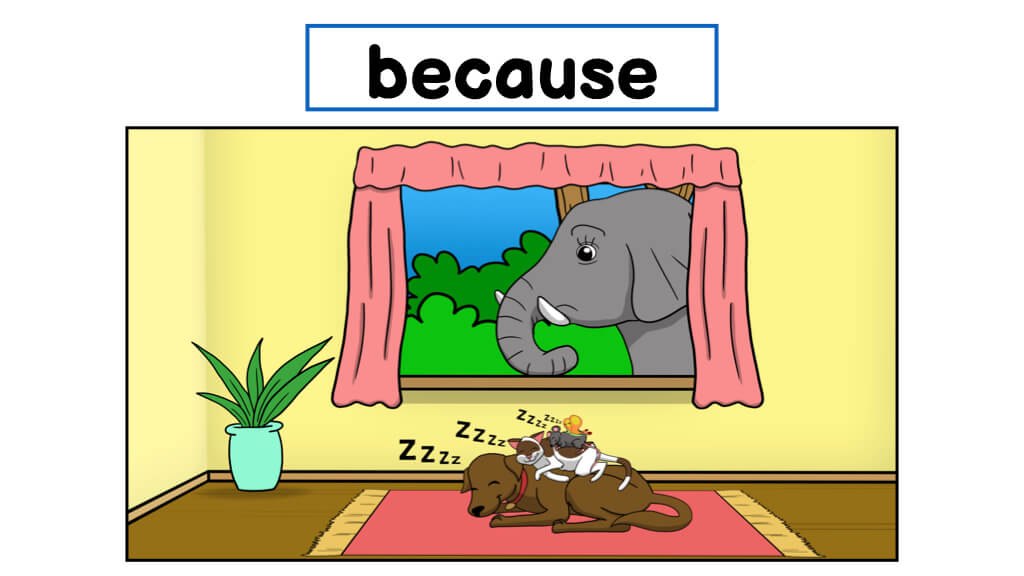
You should model retelling story parts and have readers try following your model of one part at time to focus on elaborating their language.
RETURN
Activity: Tell Me What Happened
Standards
• Use frequently occurring transition words (e.g., first, next, then, after that, finally).
• Produce and expand complete sentences when retelling a story.
• Use frequently occurring conjunctions (e.g., and, but, or, so, because).
Reader Goals
I can retell a story with sequence words.
Focus
• retelling story events in sequence
• using the word decides to show a character’s thinking
Helpful Hints
Guide


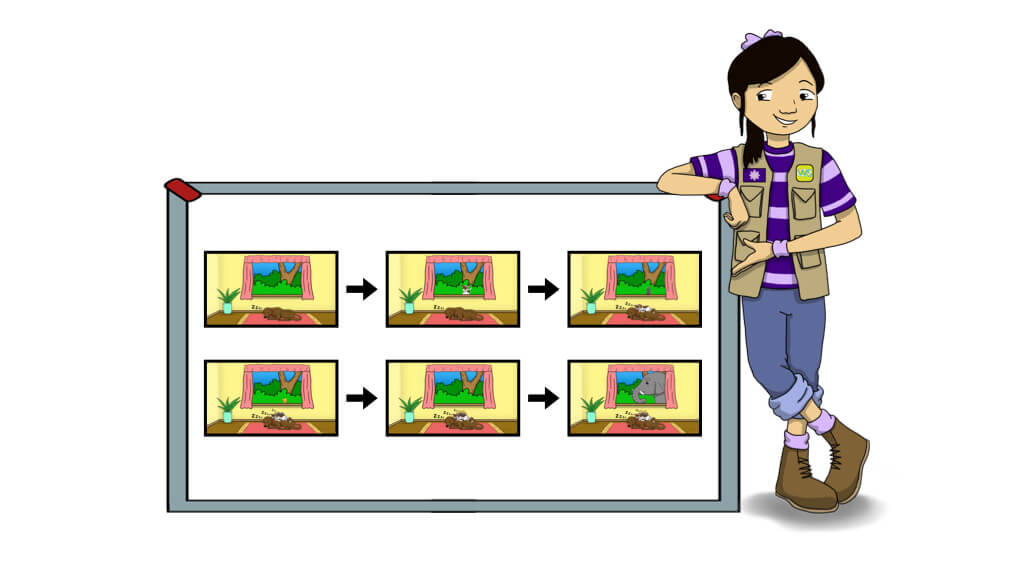
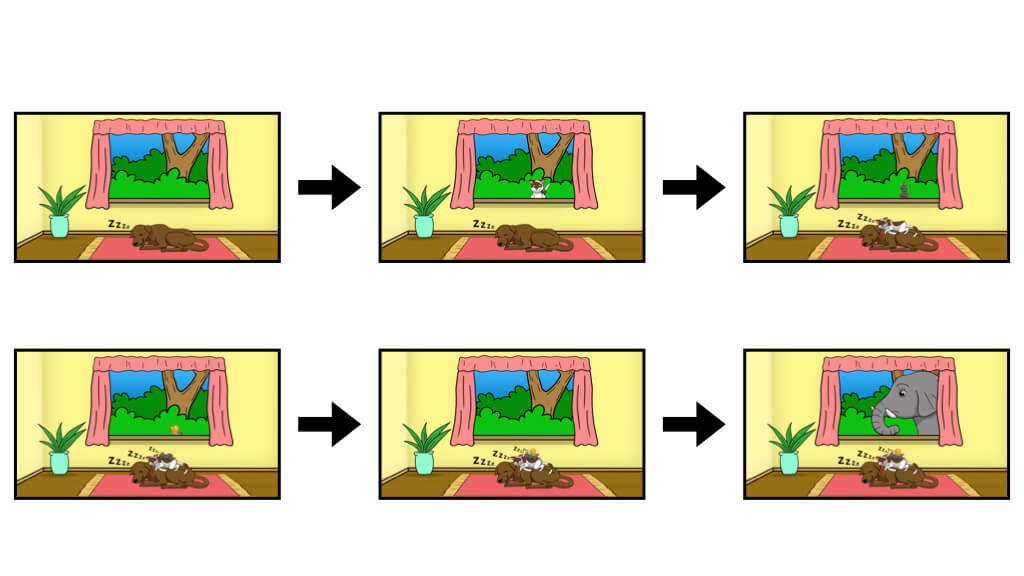
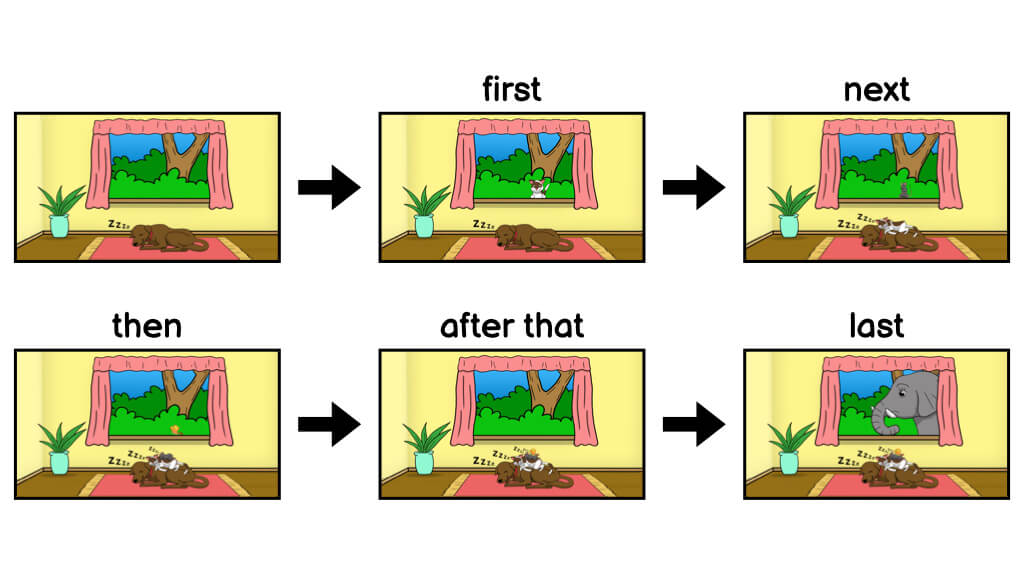
- Point to each picture as you Model the retell of events in sequence: Say
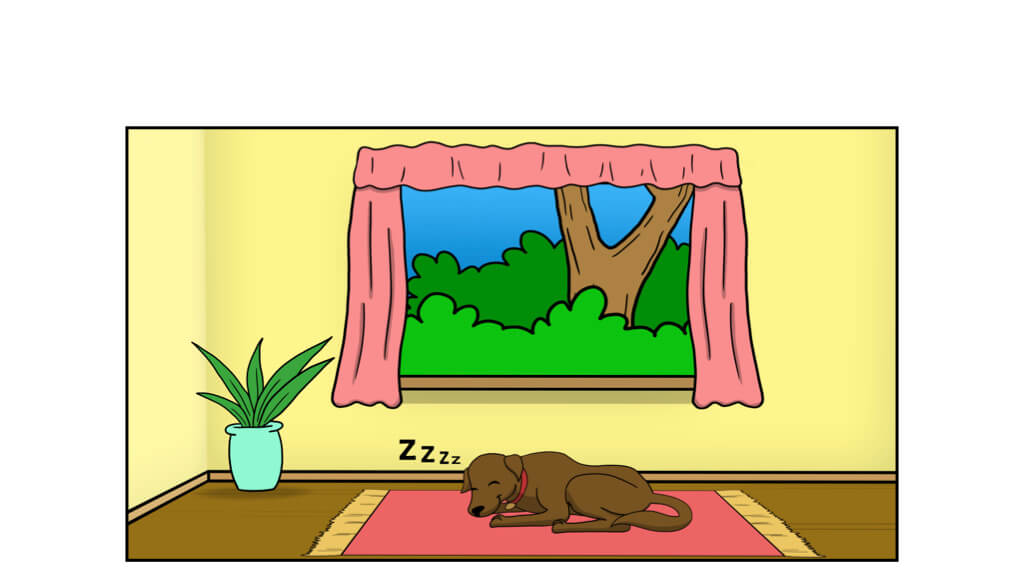
- One day a dog is napping on a mat.
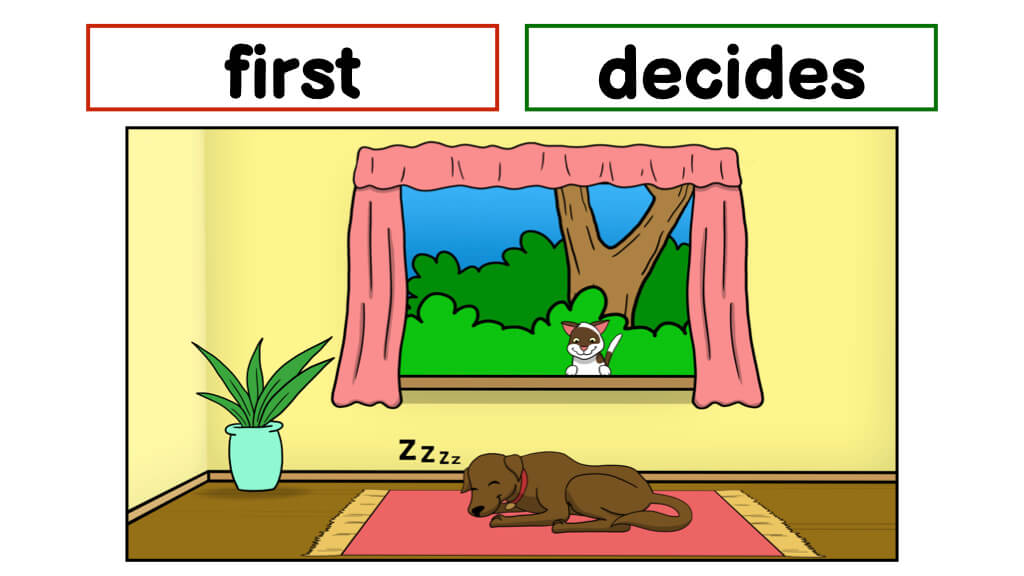
- First, a cat comes to the window and decides to come in and join the dog for a nap.
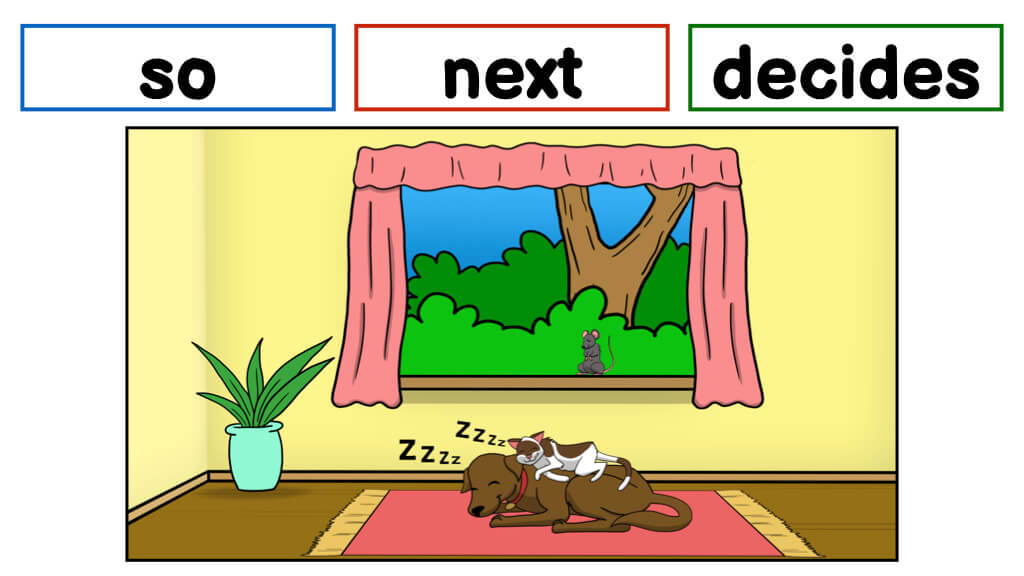
- So both animals nap together. The cat naps on the dog. Next, a rat comes to the window and decides to come in and join the dog and the cat for a nap.
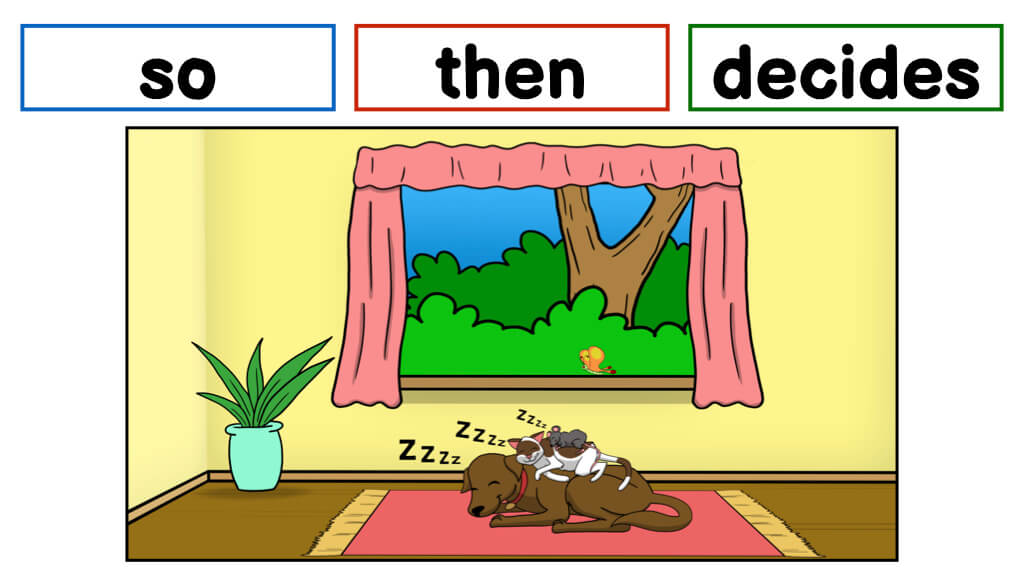
- So the rat naps on the cat. Then, the bug comes to the window and decides to join the other animals for a nap.
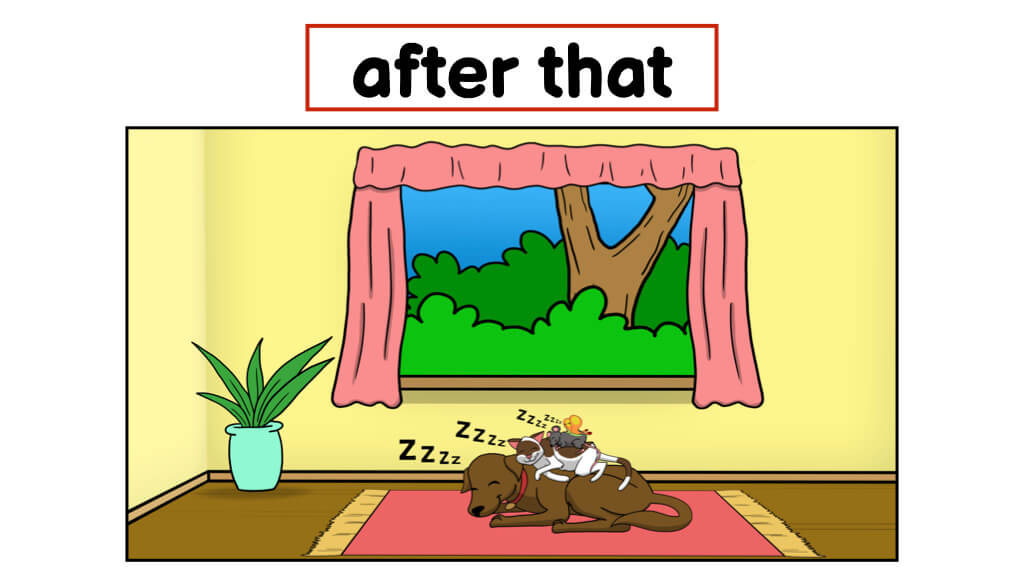
- After that, the bug naps on the rat. They all nap together.
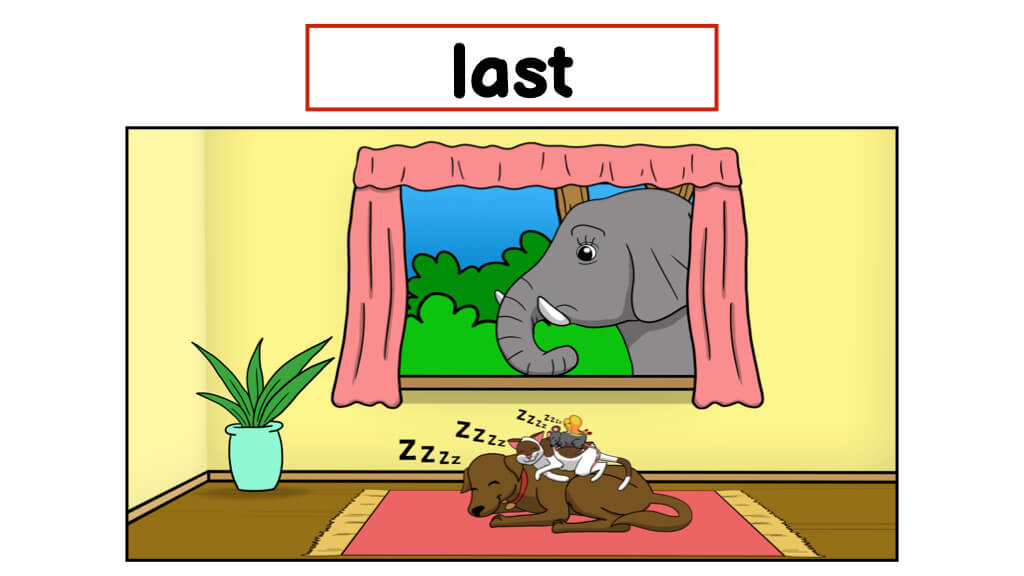
- Last, an elephant comes to the window. Oh no! The elephant is too big to get on the napping pile.
- Say
Now, it’s your turn to retell the story. Look at the pictures and retell what happened using the language cue words.
Guide
Have readers retell the story based on the pictures. They will be prompted with the language cue words and the pictures. You can also Prompt them with the questions below.
Prompts
What is the set-up of the story?
What is the dog doing?
Guide
Language Cue Words
Sequence word: first
Mental verb: decides
Prompts
What happens first?
What does the cat decide to do?
Guide
Language Cue Words
Connecting word: so
Sequence word: next
Mental verb: decides
Prompts
So what does the cat do?
What happens next?
What does the rat decide to do?
Guide
Language Cue Words
Connecting word: so
Sequence word: then
Mental verb: decides
Prompts
So what does the rat do?
What happens then?
What does the bug decide to do?
Guide
Language Cue Word
Sequence word: after that
Prompts
What happens after that?
What do the animals do?
Guide
Language Cue Word
Sequence word: last
Prompts
What happens last?
What animal comes to the window?
Guide
- Say
You retold the story with sequence words, mental verbs, and connecting words. Let’s review the pictures together and retell the story again. - Point to the language cue words as you Retell
- One day a dog is napping on a mat.
- First, a cat comes to the window and decides to come in and join the dog for a nap.
- So both animals nap together. The cat naps on the dog. Next, a rat comes to the window and decides to come in and join the dog and the cat for a nap.
- So the rat naps on the cat. Then, the bug comes to the window and decides to climb on the napping pile of animals.
- After that, the bug naps on the rat. They all nap together.
- Last, an elephant comes to the window. Oh no! The elephant is too big to get on the napping pile.
Guide
Prompt readers to use the word because to explain the cause-and-effect relationship for the last event: Say
The elephant cannot come in and get on the napping pile, because…
(Because it is too big.)